
January Reflections: Sleep, Stress and Why It Matters
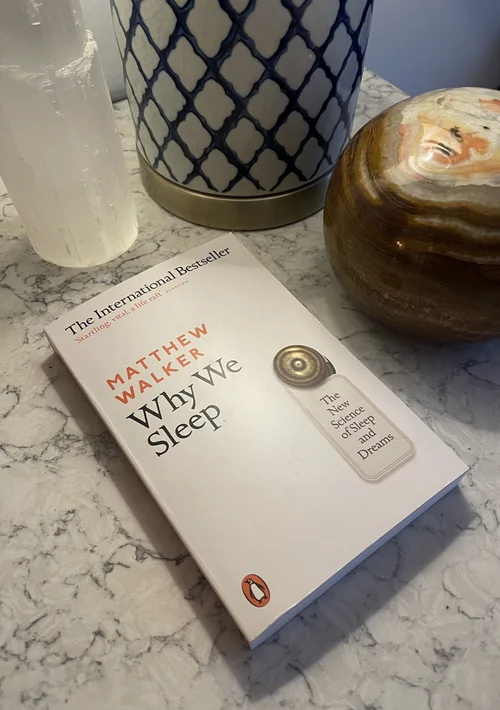
The book I’ve been living with this month: Why We Sleep
As January draws to a close…
You might have dipped your toe into Dry January. You might have started the year with the best of intentions, only to feel them wobble somewhere around week two.
Or you might have looked at January and decided, very sensibly, that it was already doing enough without you piling anything else on.
Quitter’s Day usually arrives early in January, when many resolutions quietly fall away. If yours did too, you’re in very crowded company.
That was then. This is now.
Every day really is a new day.
As adults, and especially as parents, life doesn’t ask us to carry one thing at a time. There’s work, family life, mental load, expectations, hormones, and that quiet pressure to keep everything moving. Being hard on yourself for not sticking to a plan rarely helps. Showing up at all, counts for something.
A quieter shift I’ve been noticing
January often carries an unspoken message of fix it now.
New habits. Better routines. A better version of you, preferably by February.
But most nervous systems, especially tired ones, don’t respond brilliantly to pressure. When sleep is short or inconsistent, everything tends to feel louder, heavier, and more effortful. Small problems feel bigger. Patience wears thin more quickly. Even simple decisions can feel strangely hard.
No wonder change can feel exhausting before it’s even begun.
That’s something I’ve been reflecting on a lot this month, partly because of the book I’ve been reading.
The book I’ve been living with this month
This January, I finally got round to sitting down properly with Why We Sleep by Matthew Walker. It had been sitting on my bookshelf for a while, and I’m glad I waited until I had the headspace to really take it in.
One line that stayed with me is this:
“Sleep is not an optional lifestyle luxury. Sleep is a non negotiable biological necessity.”
What struck me wasn’t just the science, but how clearly sleep underpins emotional regulation, memory processing, and our ability to cope with everyday stress. When sleep is compromised, the brain becomes more reactive and less flexible. It slips more easily into threat mode.
It’s not that we suddenly become worse at life. We’re just trying to function without the conditions we need.
And if you’ve been wondering about willpower…
If you’re one of those people who has found themselves reaching for sugary, quick fix carbs instead of whatever was on the new healthy menu, you might be surprised to learn that sleep plays a part there too.
When we’re short on sleep, levels of ghrelin, the hormone that increases hunger, tend to rise. At the same time, leptin, which helps us feel full and satisfied, drops. In simple terms, tired brains are wired to seek quick energy.
That’s biology doing what it does when we’re running low.
It’s one of the reasons I find conversations about willpower a bit unhelpful. Very often, what looks like a motivation problem is actually a nervous system asking for rest.
What I’m experimenting with next
I’ve always considered myself a bit of a night owl, while quietly admiring people who wake up early feeling refreshed and ready to go.
Rather than aiming for a perfect routine, I’m focusing on something simpler. Treating sleep as support, not self discipline.
For me, that means making my way upstairs a little earlier and slowing things down, the hour before bed. Morning Me will thank Yesterday Me for putting that in place.
And if your life involves shift work, children who wake at inconvenient hours, or hormones that laugh openly at your plans, this isn’t about rigid rules. It’s about doing what’s possible within the realities of everyday life.
One last thought for the month
If January didn’t unfold the way you hoped, that doesn’t mean you’ve failed. It just means you’re human.
Sometimes the most helpful change isn’t a brand new goal, but a small adjustment that helps your nervous system feel a little more supported.
Here’s to small changes. Brighter days.
Mentioned in this reflection
Why We Sleep by Matthew Walker
View on Amazon →
Some links may be affiliate links. As an Amazon Associate I earn from qualifying purchases, at no extra cost to you.
