March Reflections: Behaviour, Patterns and the Chimp Mind
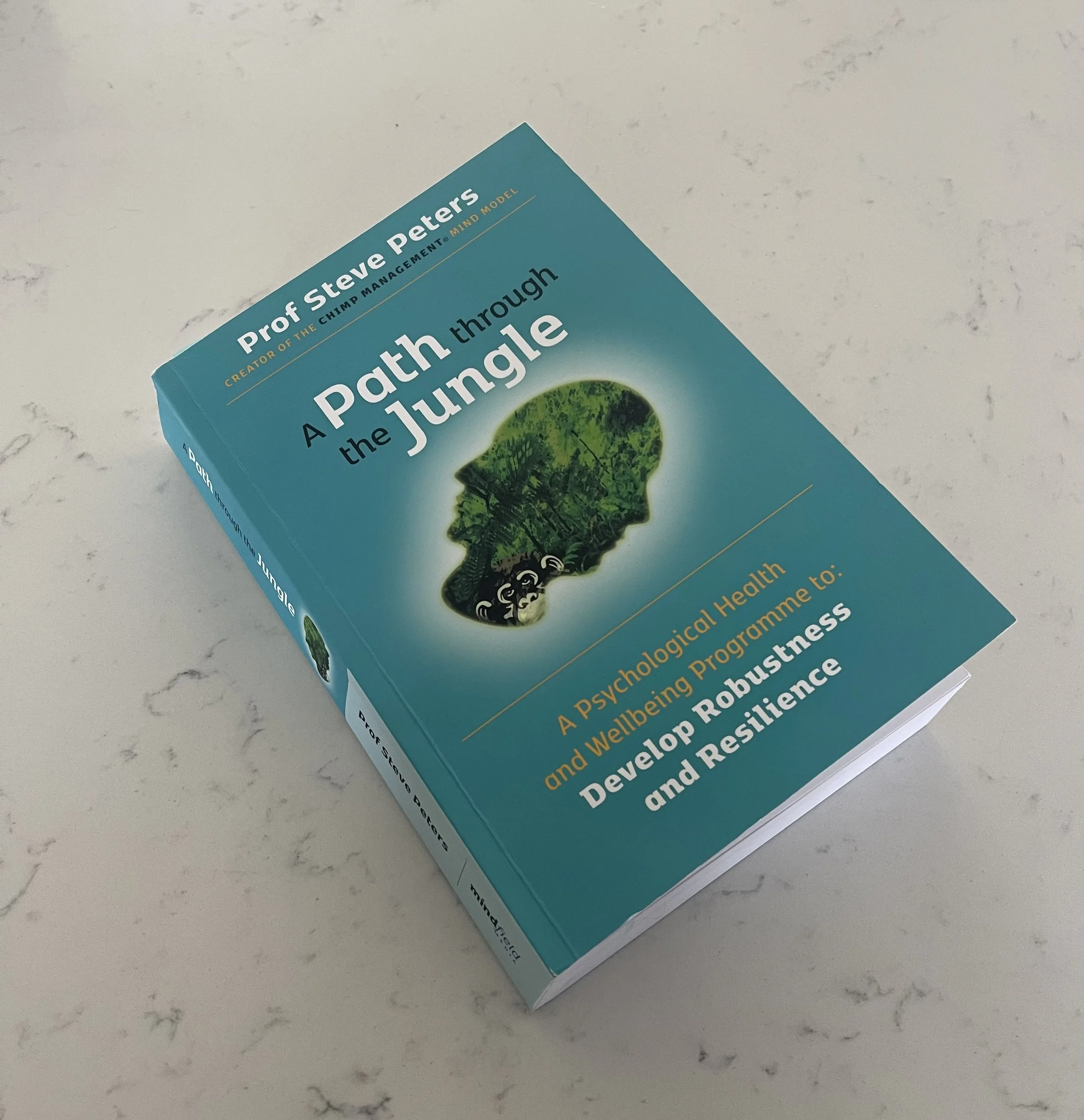
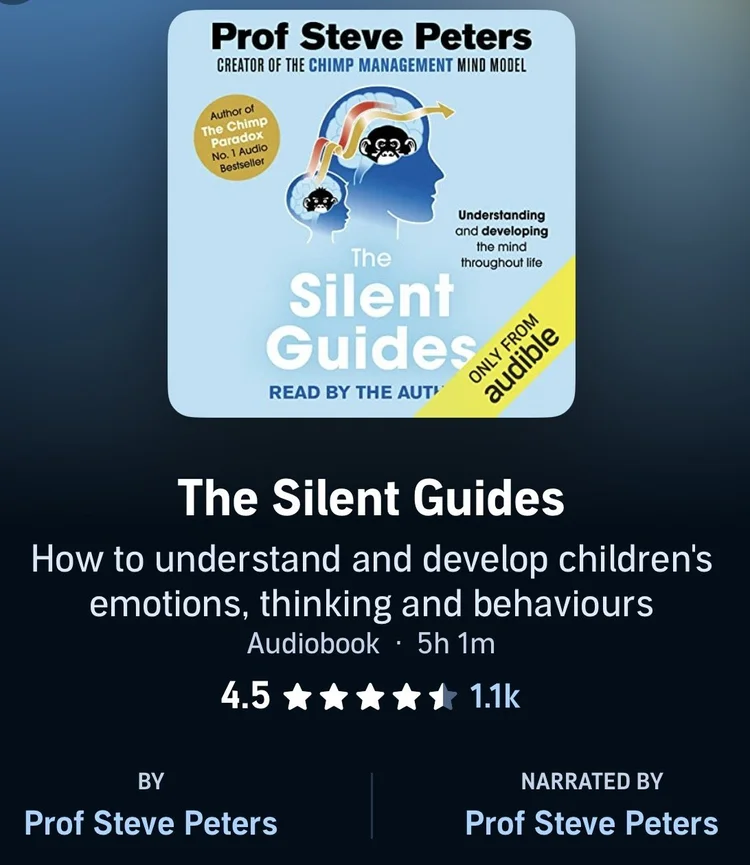
The book I’ve been living with this month: The Silent Guides
As March draws to a close…
It’s been one of those months that’s felt quietly significant.
For a lot of families, it’s been about secondary school places. New beginnings. Big changes. Friendship groups shifting, going in different directions.
In our house, it’s had that slightly strange feeling of a chapter closing. My youngest is in her final year of primary school, and I can feel that sense of things about to change.
She’s actually very ready for it. Excited to be joining her big sister, finding her feet in something new.
And I love that for her.
But I’d be lying if I said I won’t miss what we have now.
The morning walk to school has become one of those quiet, everyday things that you don’t fully appreciate until you realise it won’t always be there.
A couple of years ago, before my eldest moved up, we used to tandem the route on scooters, one child each, with the dog galloping alongside like it was the highlight of his day. It probably was.
We still talk about it now. Those slightly chaotic, laughter-filled mornings that somehow felt simple at the same time.
And now, without making too much of a thing of it, I know those moments are shifting.
Not gone. Just changing shape.
And it’s had me thinking about how we respond in moments like this. The little reactions, the bigger feelings, the things that seem to come out of nowhere.
Which has led me, to the book I’ve been listening to this month.
It’s had me thinking a lot about behaviour.
Not in a judgemental, “why are they doing that?” kind of way.
More in a curious, “what might be going on underneath that?” sort of way.
Which is something I’ve come back to again and again over the years through the work of Steve Peters, the author of The Chimp Paradox.
If you’ve come across his work, you’ll probably know the basic idea. That we all have different parts of the brain at play.
There’s the more rational, steady part… the one that can think things through.
And then there’s the chimp.
Fast. Emotional. Protective.
Not always wrong… but not always especially helpful either.
We actually used My Hidden Chimp at home during lockdown when I was home schooling the girls, and it was something we really enjoyed exploring, while also helping them understand those different parts of themselves.
We named our chimps. Of course we did.
And even now, it still pops up from time to time.
“Who am I talking to right now… you, or your chimp?”
Said with a cheeky smile… but also with a bit of truth behind it.
Because there’s something really helpful about recognising that not every reaction is coming from the same place.
Sometimes it’s thoughtful.
Sometimes it’s emotional.
Sometimes it’s quick, protective, and a little bit dramatic… it happens to us all.
And that’s not a flaw.
That’s just how we’re wired.
And of course, it’s not just what’s going on inside us.
It’s what’s around us too.
Which brought me back to something I was reflecting on last month when reading The Anxious Generation.
The idea that the environments our children are growing up in aren’t neutral.
They shape things. Quietly. Repeatedly.
Recent conversations around Meta have brought that into focus again. The sense that some of these platforms weren’t accidentally compelling, but carefully, and in many ways quite deliberately, designed to hold attention and influence behaviour.
And when you look at that alongside what we know about how the brain works… it makes a lot of sense.
What we repeat, we strengthen.
What we pay attention to, grows.
Neuroplasticity.
That’s not weakness.
It’s wiring.
Which, when you think about it, puts a slightly different lens on things.
Not just for young people… but for all of us.
Something small I noticed this month.
Smiling.
Children, especially, often show how they’re feeling quite clearly… in their faces, their posture, their tone.
And sometimes, of course, the opposite is true too… which can be harder to spot.
And yet something interesting happens when we shift even slightly.
A softened face.
A small smile.
I’ve actually turned it into a bit of a game with my husband on dog walks. We make a point of smiling at people we pass, just to see what happens.
More often than not, the smile comes back.
It’s surprisingly hard not to smile back at someone who’s smiling at you.
Even if you weren’t planning to.
And those tiny, almost throwaway moments… they do something.
Nothing huge or very noticeable.
But you can feel the shift.
And maybe they can feel it too… and carry it on.
And it’s such a simple reminder of how behaviour doesn’t just sit within us.
It moves between us.
How we show up tends to shape what comes back to us.
It also got me thinking about how we’re seen.
We went to see Legally Blonde The Musical this month, which was such a fun day.
And it’s funny… underneath all the pink and the humour, there’s something in it that still feels quite familiar.
How quickly we can make assumptions about people based on how they look.
And if I’m honest, it’s something I recognise.
That sense of being underestimated before you’ve even said anything.
And now, as a mum to girls, I notice it in a different way.
Not in a big, heavy sense. Just in those small, everyday moments where you realise how early things can start to take shape.
What’s expected.
What’s assumed.
And the kinds of messages young people are picking up about who they should be… and how they should see others.
And I suppose it brings me back to behaviour again.
Because the way we respond to that matters too.
There’s something quite powerful in staying as you are.
In being kind, without it meaning you’re overlooked.
In being confident, without needing to prove anything.
Not loud.
Not forceful.
Just… sure.
And I think there’s a lot in that.
Not everyone will get you.
And that’s ok.
The people who matter tend to see it anyway.
So maybe this month has been a bit of a reminder.
That behaviour isn’t something fixed.
It’s shaped.
By what’s going on around us.
By what we practise.
By the way we respond, moment to moment.
And not in big, obvious ways.
More often, it’s the smaller things.
The words we choose.
The way we react.
The energy we bring into a room, or a conversation, or even a passing moment on a dog walk.
None of it has to be perfect.
It’s just those small shifts, repeated over time, that start to change things.
For ourselves.
And for the people around us.
And maybe there’s something in that for all of us.
To be a little more aware of how we show up.
A little more intentional, maybe.
And a little more forgiving, when the chimp does make an appearance.
Because it will.
It happens to us all.
And every now and then… perhaps we can take a leaf out of Elle Woods’ book.
If you’re curious to explore it a little more, A Path Through the Jungle by Steve Peters is a more in-depth guide to his Chimp Paradox work that I’ve found really helpful to dip in and out of.