
May Reflections: Fear, Confidence & Waiting to Feel Ready
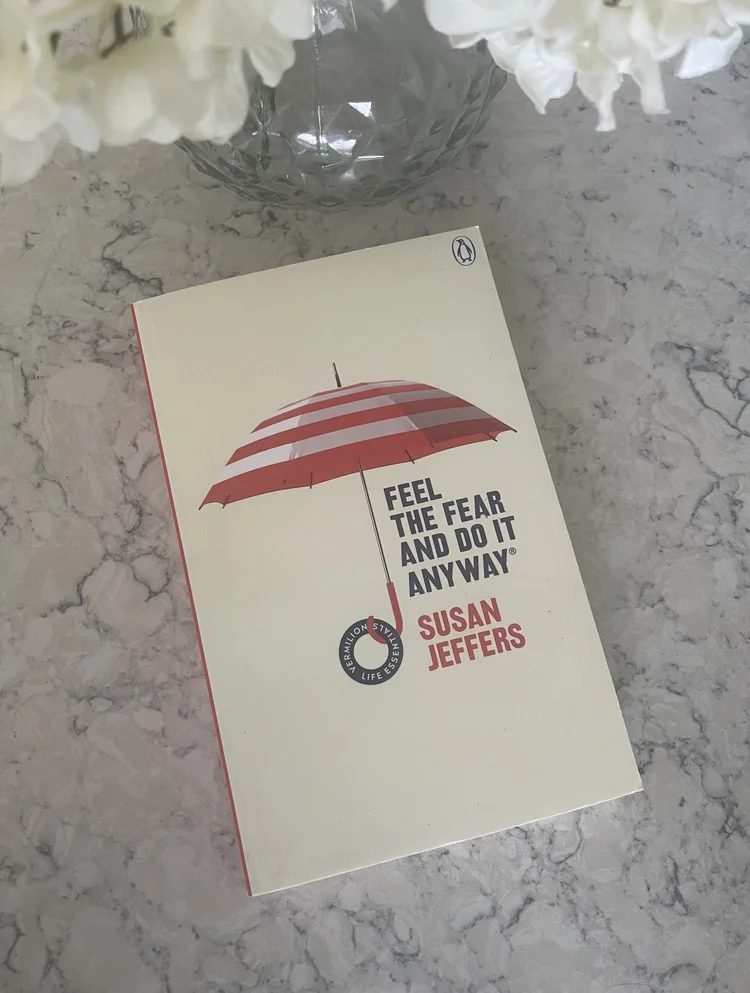
The book I’ve been living with this month: Feel The Fear And Do It Anyway
As May draws to a close…
It’s half term in our house, a welcome breather after SATs and end of year tests.
But for many of you, GCSEs and A levels are still in full swing. Not long now until you can look up from the revision books and think about something else for a while… even if the anticipatory wait for results still lingers quietly in the background.
And maybe that’s part of May’s strange feeling.
Some people are counting down to rest.
Some are making plans.
Some are talking about holidays, fresh starts, or finally “getting back on track.”
And yet, underneath it all, many of us are still waiting.
Waiting to feel ready.
Waiting to feel better.
Waiting to feel confident enough to finally begin.
This month’s book was Feel the Fear and Do It Anyway.
And despite being written decades ago, the central idea still feels really relevant.
Because it’s funny how often we put our lives on hold.
Waiting to feel ready
When I lose weight.
When work calms down.
When the kids are older.
When I feel more confident.
When someone finally treats me differently.
When I have more money.
When life feels less chaotic.
As though life starts later…
rather than in the middle of the imperfect bit we’re already in.
It’s funny too, how many summers people spend waiting to feel ready to wear the shorts, go in the pool, take the photo, book the trip or put themselves forward for the thing they really want.
As though one day a more confident version of themselves will suddenly appear out of nowhere.
Fit. Tanned. Hydrated. Emotionally regulated. Able to assemble flat pack furniture without an argument.
And until then… life remains weirdly “on hold.”
I think we massively underestimate how much time people spend preparing to live… rather than actually living.
Researching.
Tweaking.
Waiting.
Watching other people do the thing first.
As though confidence is something that arrives before action…
rather than something that’s often built because of it.
And I think that’s partly because we are incredibly good at rehearsing fear.
Rehearsing fear
What if I fail?
What if they laugh?
What if I embarrass myself?
What if I don’t get the job?
What if I don’t make the team?
What if I’m not good enough after all?
It’s funny because our brains are constantly trying to predict how things will go…
often before we’ve even given ourselves a proper chance.
Half the time we’ve mentally lived through the disaster before the thing has even happened.
The awkward conversation.
The interview.
The speech.
The social event.
The post online.
The first day.
The camera pointed at our face while we suddenly forget how to act like a normal person.
And the wild thing is… your body often responds as though the threat is already happening.
A racing heart.
Sweaty palms.
Goosebumps.
Shallow breathing.
That sudden surge of adrenaline that makes everything feel very important and very urgent.
Which makes complete sense when you realise your brain is always listening and learning.
And sometimes those fears and reactions are learnt far earlier than we realise.
Children are constantly watching the adults around them for cues about what feels safe, dangerous, embarrassing or threatening.
If somebody grows up around a lot of worry, caution or “what if” thinking, the brain can quietly absorb that way of approaching the world too.
At times, it’s obvious, like becoming frightened of spiders after watching a parent panic around them. But often it’s much subtler than that.
The hesitation.
The catastrophising.
The what if we’re late and miss the train?
The expectation that things might go wrong.
The feeling that safety comes from staying small, careful or prepared for the worst.
And because these patterns can feel so normal, many people don’t even realise they’ve been rehearsing them for years.
Sometimes people think because something hasn’t physically happened yet, the body somehow knows the difference automatically.
But if you’ve ever worried yourself into feeling sick before an event… you’ll know that’s not entirely true.
Your brain responds strongly to what you repeatedly picture and rehearse.
Which is why simply imagining something embarrassing, stressful or frightening can sometimes trigger very real physical reactions in the body… even when the thing itself hasn’t actually happened.
So it makes sense really, that many of us end up avoiding situations that trigger those feelings in the first place.
Avoidance
And one of the frustrating things about avoidance is that it often works… well, at least temporarily.
Which is exactly why your brain keeps suggesting it.
Avoid the difficult conversation and you feel relief.
Avoid the application and you avoid rejection.
Avoid the party and you avoid awkwardness.
Avoid speaking on camera and you avoid putting yourself out there, and with it the fear of judgement.
For a moment, your nervous system settles.
But over time, avoidance can quietly shrink our world without us even noticing.
And the tricky thing is, our brains are constantly trying to protect us from discomfort…
But discomfort and danger aren’t always the same thing.
Sometimes your brain reacts to:
posting online,
wearing the shorts,
applying for the course,
setting a boundary,
saying what you really think,
starting over,
or doing something visibly new…
with the same urgency it might once have reserved for survival.
No wonder growth can feel uncomfortable sometimes.
Especially when we’re doing something without guarantees.
And maybe that’s another part of adulthood nobody really warns you about…
how strangely similar it can sometimes feel to being back at school.
Waiting for certainty
So many people are quietly waiting to feel certain before they begin.
Certain the relationship will work.
Certain the career change is the right one.
Certain they won’t look stupid.
Certain they’ll succeed.
Certain they’re talented enough.
Ready enough.
Confident enough.
But life rarely hands us that kind of certainty upfront.
Most people don’t get the full map before they begin.
Half the time we’re all just walking around hoping the next decision makes sense eventually.
And maybe that’s why action can feel so exposing. It asks us to move before we have all the answers. To try before we know how it ends. To let ourselves be beginners, which is much easier to say than actually do.
Life doesn’t always unfold the way we imagined it would either.
Plans change.
Chapters close.
Confidence gets knocked.
People pivot.
Unexpected things happen.
And sometimes resilience isn’t about forcing life back into the exact shape we originally planned…
but being willing to take the next step anyway.
Even if it’s not the route we expected.
Even if we can’t yet see the whole staircase.
A little room for movement
One of the things I like about Solution Focused Hypnotherapy is the focus on moving forward.
Not perfectly.
Not fearlessly.
Not by pretending.
This isn’t about becoming Pollyanna and pretending difficult things don’t exist either.
Some situations genuinely are painful, unfair or exhausting.
But somewhere between relentless positivity and complete hopelessness…
there’s usually still a little room for movement.
And sometimes that movement starts by becoming clearer on what we actually want instead.
Because many people can describe in great detail what they don’t want…
while struggling to picture what better might actually look like.
And yet the brain often needs a direction to move towards…
not just something to move away from.
Rehearsing something different
And that’s where things get interesting.
Because the brain also responds to positive rehearsal.
There’s a reason professional athletes mentally rehearse performances before a race, match or competition. Musicians do it too. Speakers. Performers. Even surgeons.
Visualisation isn’t just wishful thinking.
It’s a way of helping the brain become more familiar with an experience before it happens.
You don’t have to be a professional athlete to benefit from that.
During guided visualisation in sessions, a teenager might imagine themselves walking calmly into an exam hall.
A parent preparing for an interview after years away from work.
Someone practising a wedding speech without mentally catastrophising every possible outcome halfway through.
Your brain often copes better with situations that feel familiar rather than threatening.
Confidence afterwards
Sometimes people assume confidence is a prerequisite for action.
As though brave people somehow wake up full of confidence… fully prepared and completely unafraid.
But often confidence is built afterwards.
After the awkward conversation.
After the first driving lesson.
After posting the video.
After turning up anyway.
After surviving the thing we were convinced we couldn’t do.
And perhaps that’s the real point.
Confidence isn’t always something we find first.
Maybe it’s something we slowly build through movement.
Because waiting to feel fearless before we begin can sometimes become a very long wait.
And as the saying goes, what we resist often persists.
Sometimes the way through isn’t waiting for the fear to disappear…
It's taking one small step with it there.
Feeling the fear… and doing it anyway.
Mentioned in this reflection
Feel the Fear and Do It Anyway by Susan Jeffers
Is one of those books that feels more like a gentle guide than a theory-heavy read, full of practical reflections around fear, confidence and taking action before you feel completely ready.
If you’d like to explore it further, you can- Find the book here →
Some links may be affiliate links. As an Amazon Associate I earn from qualifying purchases, at no extra cost to you.
